Achieving effective budget friendly home organization involves prioritizing thorough decluttering to reduce excess before repurposing existing household items as storage. You can maintain a tidy environment for free by establishing consistent family routines, such as chore charts and digital decluttering, rather than purchasing expensive new organizers.
Many homeowners fall into the trap of believing that a more organized life requires an expensive shopping trip for plastic bins and matching baskets. This cycle often results in more clutter disguised as containment, which fails to address the underlying issue of spatial management. Real efficiency is not found in trendy aesthetics; it is found in the disciplined reduction of physical inventory and the smart application of structural logic. By mastering strategic decluttering methods like the 50 percent rule, you can transform even a storage deficient home into a streamlined environment. We will discuss how to repurpose existing items, establish functional command centers, and identify when to prioritize professional quality over fleeting styles. You will learn to view decluttering as a tool for financial freedom rather than an additional expense.
The Real Secret to Budget Friendly Home Organization
Many people assume that getting organized requires a heavy investment in matching plastic bins or a long drive to a big box retailer. This is a common misconception that often adds more clutter to your home before you have even started. True budget friendly home organization begins with subtraction, not addition. The real secret to a functional space is not finding a prettier way to store things you do not need; it is removing the items that no longer serve a purpose.
In Beaver, we tend to value practicality and longevity over aesthetic trends. This local mindset focuses on using what you have before seeking new solutions. Before you reach for your wallet, start by shopping your own home. Look at the containers, shelves, and spaces you already own with a fresh eye. By prioritizing a curated selection of everyday essentials and clearing out the excess, you create a system that works because it is simple.
Data suggests the most effective way to organize is to categorize items like clothes, paperwork, and tools, then pare them down until the remaining items fit comfortably in your existing space. When you focus on having less, the need for complex storage systems disappears naturally. This approach saves money and ensures that every item in your home has a clear, functional place.
Mastering the Rules of Decluttering: 50 Percent, 3 3 3, and 5 5 5
Once you commit to subtraction, you need a framework to guide your decisions. Decluttering is often more mental than physical. Using specific rules helps remove the emotional attachment to items that are simply taking up space. For those looking for budget friendly home organization solutions, these three methods offer a clear path forward without requiring you to purchase a single bin.
The 50 Percent Rule is the most direct approach for high traffic areas like kitchen drawers or workshop shelves. The goal is to remove half of the items in a specific zone. If you have a container of twenty screwdrivers, you identify the ten most reliable ones and remove the rest. This method forces you to confront redundancy. It ensures that your most useful tools are always accessible, rather than buried under duplicates. It is a practical way to reset a space that has become overwhelmed by sheer volume.
For clothing, the 3 3 3 Rule simplifies a closet by limiting you to 33 items for three months. This count includes clothes, shoes, and accessories. In a place like Beaver, where seasons dictate our needs, this rule helps you realize how few items you actually rely on for work and daily life. By boxing up the excess for a quarter, you create an accessible and welcoming environment in your bedroom without spending money on closet organizers. You will likely find that you do not miss the items you set aside.
Finally, the 5 5 5 Rule works best as a daily maintenance habit. You find five items to throw away, five items to donate, and five items that belong in a different room. This is a low pressure way to chip away at clutter in short bursts of time. It prevents the buildup that leads to expensive, unnecessary shopping trips. When you follow these steps, you are not just cleaning; you are auditing your inventory to ensure every item in your home earns its keep.
How to Organize a Small House With No Storage or Closets
In Beaver, many of our historic homes were built long before the modern obsession with oversized closets and walk-in pantries. When you are dealing with a small footprint and zero built-in storage, budget friendly home organization requires a shift in how you view your floor plan. Instead of fighting the architecture, you must work with it by prioritizing functional layouts over hidden storage.
Start by thinking vertically. When horizontal space is at a premium, walls become your most valuable real estate. Simple wall-mounted hooks or high-reaching shelves allow you to keep items accessible without encroaching on walking paths. In a small home, furniture must work twice as hard. A sturdy trunk serves as both a coffee table and a vault for extra blankets; a wooden bench in the entryway provides a place to sit while housing seasonal footwear underneath. These pieces offer utility without requiring the construction of new closets.
You can also define the function of a room by creating distinct zones using items you already own. An area rug or an open-backed bookshelf can delineate a workspace from a living area, providing structure without closing off the room. This approach emphasizes living comfortably with a curated selection of everyday essentials rather than trying to cram excess inventory into invisible spaces. In these older homes, transparency is often your best tool. When your belongings are visible, you are naturally more selective about what you keep, ensuring that every item in your home earns its place through daily use.
Repurposing Everyday Items as Free Organizers
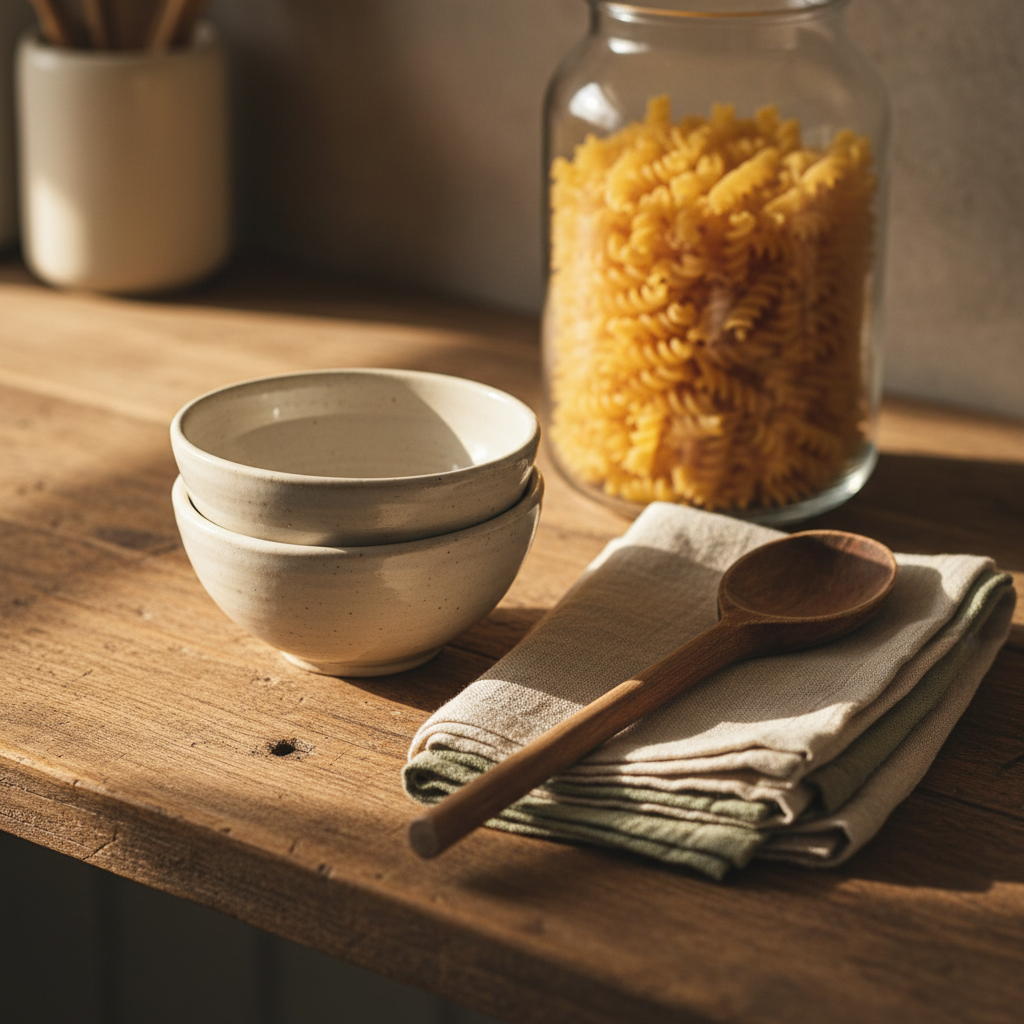
Effective budget friendly home organization relies on identifying the hidden utility in items you might typically discard. Before tossing containers into the recycling bin, consider their structural value. Glass jars from local honey or preserves are excellent examples; they are durable, clear, and easy to clean. Once the labels are removed, these jars serve as excellent storage for office supplies, sewing kits, or loose fasteners in a workshop. Because they are transparent, you can see your inventory at a glance without needing to print labels.
Cardboard also offers immediate organizational benefits. Sturdy shoeboxes, often built to withstand significant weight, function perfectly as drawer dividers. By placing them inside larger dresser or kitchen drawers, you create rigid zones for smaller items that typically become a jumbled mess. For the cluttered space under a kitchen or bathroom sink, a simple tension rod provides a clever solution. By mounting the rod across the width of the cabinet, you can hang spray bottles by their triggers. This clears the cabinet floor for heavier items and keeps cleaning supplies within easy reach. These methods emphasize a no buy philosophy that prioritizes function over form, ensuring your home stays orderly through practical, zero cost solutions.
Why Decluttering is the Ultimate Money Saving Tool

Decluttering acts as a direct audit of your household finances. When your storage areas are packed tight, you lose visibility of your inventory, which inevitably leads to duplicate buying. This is a frequent issue with pantry staples and hardware tools. You might purchase a second bottle of oil or another set of drill bits simply because the originals were buried behind unused items. By clearing the excess, you gain a clear view of your curated selection of everyday essentials, ensuring you only spend money on what you truly need.
A clean, organized environment also minimizes the psychological stress that often triggers impulse shopping. When your home feels chaotic, the temptation to find a quick fix through new purchases increases. Budget friendly home organization breaks this cycle by creating an accessible and welcoming environment that requires no additional spending to maintain. A functional space allows you to see the value in what you already own rather than looking for satisfaction in the checkout line.
Efficiency often comes down to the quality of the tools you keep. Instead of owning three cheap, semi-functional versions of a kitchen knife or a garden trowel, it is more cost effective to own one high quality tool that lasts for years. Keiths Store focuses on providing these durable, practical goods at fair prices. Investing in a single reliable item reduces long term waste and prevents the recurring cost of replacing broken, low tier products.
Creating a Household Command Center for Busy Families
Managing the daily flow of new items is just as important as clearing out the old. For busy families in Beaver, the kitchen or entryway often serves as the primary intake point where mail and school papers tend to pile up. A household command center acts as a central hub to catch these items before they migrate to the dining table or kitchen counters. You do not need expensive custom cabinetry; a small, underutilized section of wall space is sufficient.
Start by installing a few sturdy hooks for key rings and a single wall pocket or basket for incoming paperwork. This simple setup keeps surfaces clear and ensures essential items are exactly where you expect them to be when you are heading out the door. To maintain this system, implement a straightforward chore chart. This involves the whole family in the process of budget friendly home organization by assigning specific roles. Tasks like sorting the daily mail or clearing the paper bin every Friday evening prevent the system from becoming another source of clutter.
When everyone participates, the home remains an accessible and welcoming environment for both residents and guests. A functional command center prioritizes a curated selection of everyday essentials like a central calendar, a notepad, and a designated spot for outgoing items over decorative trends. By keeping the design simple and the purpose clear, you create a long term solution for household efficiency that requires zero additional investment.
When to Invest: Choosing Practical Quality Over Aesthetic Trends

Once you have established a functional flow with the items already in your possession, you may identify specific gaps where a new purchase is the most logical next step. Successful budget friendly home organization relies on knowing when to stop repurposing and when to invest in a permanent solution. Avoid the temptation of seasonal decor or flimsy plastic organizers that crack under weight. Instead, look for heavy duty, multi use tools like steel shelving units, reinforced hardware bins, or solid wood benches that offer storage and seating. These items do not just occupy space; they improve the structural utility of your home.
At Keiths Store, we focus on providing the Beaver community with goods that prioritize performance over appearance. We understand that a fair price is only a value if the product lasts for years. By choosing a curated selection of everyday essentials designed for durability, you prevent the cycle of replacing cheap goods every few seasons. This creates an accessible and welcoming environment where your tools and storage work as hard as you do. When you choose quality over trend, your purchase becomes a long term investment in your household's overall efficiency.